


Frequently Asked Questions
Find quick answers to the most common questions about our products, services, and support.
How to calculate the distance between two points in the Hi-survey software?
There are three common methods for measuring or calculating the distance between two points:
1) After collecting the coordinates of two points, use the distance and azimuth tool to calculate the distance between the two points.
2) Create a linear feature during the measurement process. Click Create in the step-by-step measurement mode, collect point coordinates one by one, and click Create again when finished. The line will automatically connect and display the length of the line elements. This is suitable for polylines.
3) View the distance to the previous point in the step-by-step measurement information bar (horizontal distance/slope distance from the previous point).
What should I do if the computer cannot find the controller disk after connecting the controller to the computer with a data cable?
After connecting the controller to your computer with a data cable, select File Transfer on the controller. We recommend using the standard data cable.
Note: If File Transfer mode isn’t enabled after connecting, enable USB debugging in Settings > System > Developer Options on the controller’s home page and reselect File Transfer mode.
The point data in the coordinate point library was accidentally deleted. Can it be restored?
Hi-survey supports the recycle bin function. Users can restore deleted points through the recycle bin function in the upper right corner of the coordinate point library.
Why did the tilt measurement exit?
The tilt measurement function can eliminate the trouble of alignment and greatly improve work efficiency. Due to the characteristics of IMU module, the initialization state may be exited during the tilt measurement process. Therefore, the following should be noted during the tilt measurement process:
1) If the device remains completely stationary for an extended period, reinitialize it.
2) If the device rotates rapidly on the centering pole (more than 2 revolutions per second) or is poked hard on the ground, reinitialize it.
3) If the tilt measurement icon indicates “Not Initialized” or indicates low tilt measurement accuracy, reinitialize it.
In the external radio 1+1 mode, what should I do if the Rover displays a Auto solution?
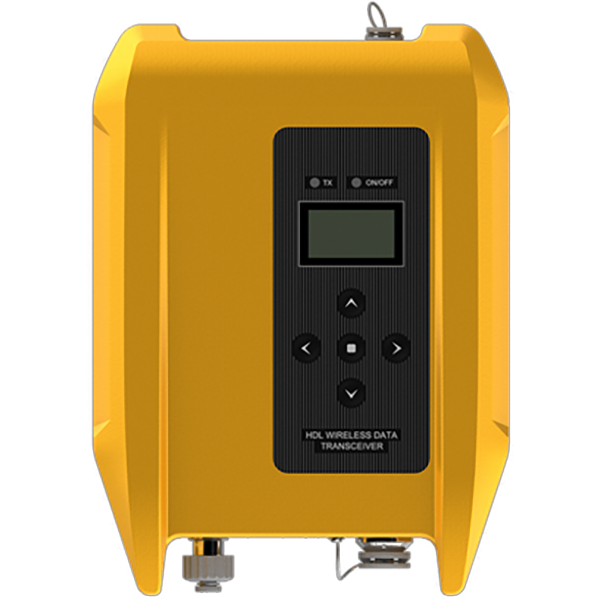
In external radio 1+1 mode, the Base transmits differential data to the high-power external radio via a 5-pin cable. The external radio broadcasts the data, and the Rover receives it. Troubleshooting steps are as follows:
1) Verify that the Base is transmitting differential signals properly by observing whether the signal light on the Base is flashing normally. If the Base is not transmitting differential signals, reconfigure the Base.
2) Verify that the external radio is transmitting signals by observing whether the TX/RX lights on the external radio are flashing normally. If not, it indicates that the radio is not transmitting differential signals. Check the 5-pin data cable for abnormal transmission and the battery level (a flashing power light indicates a low battery level).
3) Verify that the Rover is equipped with a radio antenna (the radio antenna is approximately 30 cm long and flexible).
4) Verify the Rover data link. In external radio 1+1 mode, the Rover uses the internal radio to receive differential signals. Therefore, select the internal radio for the data link. Keep the radio protocol and channel settings consistent with the external radio.
The Hi-Target 19200 protocol is recommended. Note: The transmission distance of the radio signal is affected by the environment. It is recommended that the Base be located in an open area with no obvious obstacles between the Base and the Rover.
What should I do if the Rover displays ‘Auto’ solution in the built-in radio 1+1 mode?
In built-in radio 1+1 mode, the Base uses the built-in radio to transmit differential signals to the Rover. Troubleshooting steps are as follows:
1) Verify that the Base is transmitting differential signals properly by observing whether the signal light on the Base is flashing normally. If the Base is not transmitting differential signals, reconfigure the base station.
2) Verify that both the Base and Rover are equipped with radio antennas (the radio antenna is approximately 30 cm long and flexible).
3) Verify that the rover’s radio protocol and channel settings match those of the base station. Only when these settings are consistent can differential transmission be performed. The Hi-Target 19200 radio protocol is recommended.
How to set CORS mode?
After the instrument and the controller are connected, click Rover – Manual Settings, select ‘Internal GSM’ or Data Collector Internet’ for the data link (select Built-in Network if the device has a network, select Data Collector Internet if the controller has a network), select CORS for the server, and enter the IP, port, mountpoint, username, and password provided with the CORS account. After entering, click Set and wait for the device to be fixed.
What should I do if the Hi-survey software shows that the solution is known?
The RTK device has three operating modes: Base, Rover, and Static. When the operating mode is switched to Base, the software interface displays the instrument solution as Known. To switch to Rover mode, you can manually set the Rover mode in the Hi-Survey software or double-click the device power button to switch.